

The Energy Conversation

"How can you work in Oil and Gas and still care about the environment?"

It's a question I've been asked in a myriad of different ways throughout my career.
I've been fortunate enough to work in various Supply Chains for more than 20 years across Defence, Mining, Construction, Oil and Gas, Renewables and a handful of other industries. I've seen projects from the inside, not from a boardroom or a press release.
For me, the answer has always been simple.
I don't see the world in absolutes. I can only speak from a place of experience here in Australia and Papua New Guinea. Where we are heavily regulated, and people for the most part, genuinely care.
Now, I don't think caring about the environment means you have to ignore the realities of modern society, and I don't think working in industry means you stop caring about the landscapes and wildlife that make Australia extraordinary.
My career has taken me through some of the most remote and beautiful parts of the country. I've watched weird and wonderful animals, seen more sunrises and sunsets than most, spent nights under the stars, and seen fragile ecosystems existing alongside working industrial landscapes. Those experiences have shaped both my photography and my views.
They've also taught me that every form of energy comes with a footprint.
Oil and Gas has one. Solar farms have one. Wind farms have one. Mining for the materials that build renewable infrastructure has one.
The real question isn't whether an energy source has an impact. The real question is whether we're willing to honestly account for all of its impacts.
That is why winning the Australian Energy Producers Photographic Award means so much.
(If you'd like to see the gallery - 2026 Gallery - In Site ).
The award sits at the intersection of two worlds that many people think cannot coexist. I believe they can. I've seen and documented it. I believe industry can support conservation, that people who work in resources can and do deeply love the environment, and that photographers can tell stories that are more complicated than simple good-versus-bad narratives.
The image that won was never intended to be propaganda for or against anything. It was an invitation to pause and acknowledge that Australia is a country of contradictions. Wildflowers can bloom beneath a beam pump. Wildlife can adapt to human-altered landscapes. Industry and nature can exist in the same frame.
The resources sector often gets tarred with the same brush, and at times there are good reasons for that. It is inherently high-risk work. But the reality I have seen over two decades is that safety is rarely an abstract corporate slogan. It comes down to the individuals on the ground each day—planning the task, identifying the hazards, assessing the risks, and taking responsibility for delivering a safe outcome. It's not perfect, but nor are the alternatives.
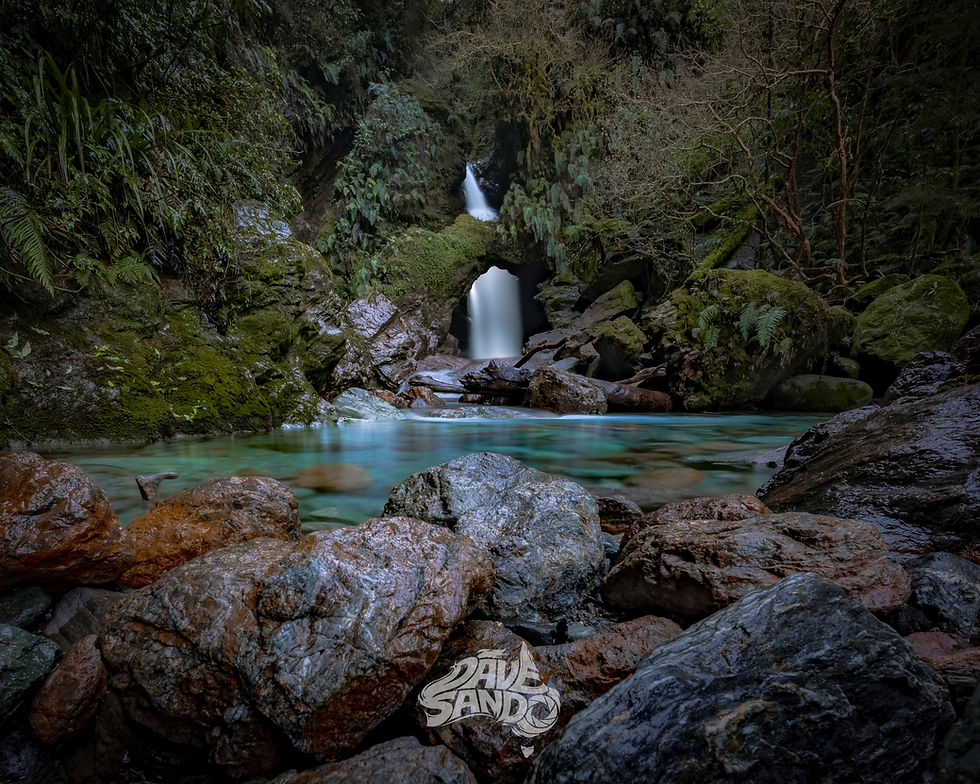
I remember being asked by a member of the public about "green energy" after my Australian Geographic Nature Photographer of the Year shortlisting in 2025 (image below).

I made the point that perhaps we should be more careful with the language we use. "Renewable" and "low emissions" are measurable terms. "Green" often ignores the environmental costs that occur before construction and after decommissioning.
That isn't always a popular opinion.
I once worked on what was, at the time, the largest solar farm in Australia. The company I worked for no longer exists, but the project involved the delivery and installation of 2.2 million solar panels.
Was it renewable? Absolutely (in the sense the Sun comes out every day!).
Was it environmentally free? Not by a long shot.
I'm not even talking about the wildlife habitat that had to be cleared before construction.
I'm not talking about the ethical questions surrounding global supply chains and the extraction of many of the raw materials required to manufacture the panels.
Nor am I talking about the transport emissions associated with moving millions of panels halfway around the world.
I'll give just one very small example.
Those 2.2 million panels arrived as 44,000 palletised loads. Each pallet held 50 panels in a cardboard box measuring 139.7cm x 114.3cm x 83.8cm. Each one sat on a treated timber pallet and was wrapped around seven times in plastic stretch wrap.
The perimeter of a single pallet was approximately 5.08 metres.
Wrapped seven times, that equals 35.56 metres of plastic per pallet.
Across 44,000 pallets, that's 1,564,640 metres of plastic wrap.
More than 1,560 kilometres. The stretch wrap alone would extend further than the drive from Adelaide to Sydney, or almost twice the distance from Sydney to Melbourne.
That's just the packaging for the panels themselves.
No, the cardboard wasn't recycled. There were no economical alternatives. The pallets weren't reused either; they were turned into wood chips.
How green is that?
I've spoken before about the importance of considering renewable energy waste, from the future disposal of solar panels to the recycling challenges surrounding wind turbine blades. If we're serious about sustainability, then sustainability should include what happens at the end of a project's life, not just at the beginning.
For me, conservation isn't a political team sport. It's about accountability, transparency and making sure that the natural world is considered in every decision we make.
The existence of industry doesn't remove our responsibility to minimise impacts or to plan for the future.
If anything, it increases it.
I hope this photograph encourages people to look a little longer, ask harder questions, and perhaps accept that some of the most important conversations happen in the space between certainty and ideology.
Because at the end of the day, I don't photograph the world as I wish it was.
I photograph it as it is.
Dave


Totally agree, awesome write up!